
Request a Callback
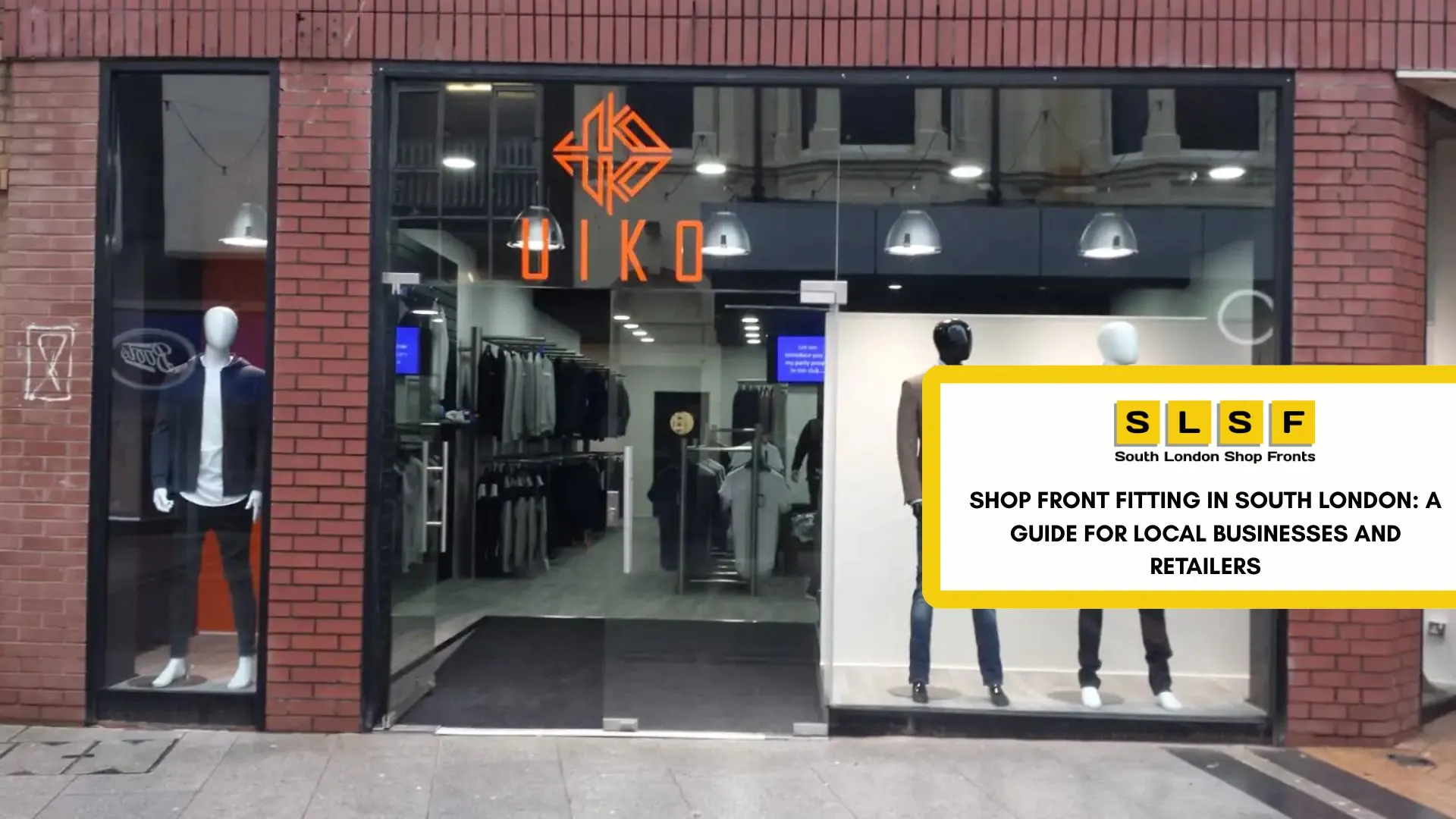
Shop Front Fitting in South London: A Guide for Local Businesses and Retailers
South London has a commercial energy all of its own. From the independent traders of Brixton Market and the creative businesses lining Peckham’s Rye Lane to the gastropubs and boutiques of Clapham and the growing retail corridors of Croydon, the businesses here are as varied as the neighbourhoods they serve. What they share, increasingly, is an understanding that the physical front of their premises is not a fixed cost to be minimised, it is an asset to be invested in, and that starts with getting shop front fitting right.
South London’s Commercial Streets Demand More Than a Standard Fit
There is a particular challenge to commercial shop front work in South London that anyone who has worked across the city will recognise immediately. The urban environment is exceptionally varied, Victorian terrace houses rubbing shoulders with 1970s concrete parade units, converted railway arches neighbouring new-build mixed-use schemes, Georgian high streets subject to conservation areas just minutes away from industrial estates not subject to any such restrictions.
It follows that a South London retailer cannot select an off-the-peg facade solution from a catalog and hope that it will work; every premises presents its own structural conditions, and every location carries its own planning context. A specialist who truly knows this territory begins with a site survey and a conversation about planning before any specification is drawn up, not after.
The Case for Aluminium Shopfronts in London
When it comes to material choice, the market has delivered a fairly clear verdict. Aluminium shopfronts London wide have become the dominant choice for commercial frontages, and the reasons are practical rather than merely aesthetic.
Aluminium does not distort because it is dimensionally stable; it does not warp, expand, or contract depending on the seasons and fluctuations in temperatures like wood would. The fact that pollution, dampness, and vibrations from traffic are part and parcel of the urban setting in South London means that it will give an advantage to the business in terms of durability and low maintenance. Aluminium has a powder coating finish in virtually all RAL colors.
Modern shop fronts made out of aluminium which London traders have now begun using are also much better than those used ten years ago when it comes to thermal efficiency. With the modern aluminium shop fronts, there is far less heat loss from the frame, hence reducing energy costs, something which is very important to South London traders.
Structurally, aluminium handles large glazed areas with ease, which is precisely why it has become the material of choice for retailers who want maximum area, minimal frame sightlines, and the open, light-filled aesthetic that converts passing footfall into customers through the door.
Glass Partitioning London: Taking the Investment Inside
For many South London businesses, a shop front refurbishment is also the moment they turn attention to the interior. There has been much demand for glass partitioning in London office and retail fit-out in recent times, but the idea behind this is no different from the idea behind glass frontage, where transparency leads to improved spaces.
Using glass partitioning in open plan offices situated above the retail outlets provides well-defined meeting rooms, break rooms, and even private workrooms without any loss of openness and light. In retail and hospitality businesses, glass partitioning London providers offer screens and dividers that provide defined areas for customers, provide VIP and privacy options, and bring architectural quality to interiors that are simply not available through other means of partitioning.
The consistency between a properly designed glass front and a glass partitioned interior creates a consistent design approach throughout the commercial space, which connects with customers very well.
Timing, Disruption, and Getting the Project Right
One of the most practical questions South London retailers ask when planning a shop front project is how much trading disruption to expect. The honest answer depends on scope, but an experienced shop front fitting team will have managed this challenge on dozens of similar projects and can schedule installation to minimise impact on trading hours, often completing primary structural work overnight or across a single weekend.
The other question worth asking before any contract is signed is about aftercare. A shop front is not a purchase you make and forget, frames require periodic adjustment, glazing seals need inspection, and any motorised or electronic access elements need servicing. A supplier who can demonstrate a structured aftercare offering is one who views the relationship as ongoing rather than transactional.
South London’s best retailers have always understood that their premises tell a story before a single product is seen or a word is spoken. Aluminium shopfronts London businesses are commissioning today reflect that understanding, durable, thermally efficient, visually distinctive, and built to last.
Frequently Asked Questions (FAQs)
How long does shop front fitting typically take in South London?
Most single-front installations are completed within one to two days; more complex projects involving structural modifications may take three to four days with phased work to minimise trading disruption.
Do aluminium shopfronts require planning permission in South London?
Premises in conservation areas, typically require prior consent; a reputable installer will advise on this before any specification is finalised.
What colour options are available for aluminium shopfronts in London?
Powder-coated aluminium is available in virtually any RAL colour as well as anodised finishes; bespoke colour-matching to brand guidelines is standard practice for most quality suppliers.
Is glass partitioning suitable for small South London offices and retail spaces?
Absolutely, frameless or slim-framed glass partitioning is particularly effective in smaller spaces as it defines zones without making the interior feel enclosed or cramped.
What maintenance does a glass shop front require after installation?
Frame seals should be inspected annually, glazing cleaned regularly to maintain appearance, and any motorised access components serviced in line with the manufacturer’s schedule, typically once a year.